Table of Contents
The Importance of Practicing Math Bonds with Your Children
As parents, we want our children to succeed in school and beyond, and one of the most effective ways to support their academic growth is by practicing math bonds (also known as number bonds) with them. Think of it as the addition and subtraction equivalent of practicing times tables. Math bonds are a foundational concept that helps children understand the relationships between numbers, laying the groundwork for strong mathematical skills. Here’s why making math bonds a part of your daily routine is so valuable:
What Are Math Bonds?
Math bonds are pairs of numbers that add up to a specific total, such as 3 and 7 making 10, or 4 and 6 making 10. They teach children how numbers work together and are a key building block for addition, subtraction, and mental math.
Why Practicing Math Bonds Matters
- Builds Number Sense – Practicing math bonds helps children develop an intuitive understanding of numbers and their relationships. This makes it easier for them to solve problems without relying on memorization.
- Boosts Confidence – Mastering math bonds gives children a sense of accomplishment, encouraging them to tackle more complex math with confidence.
- Improves Mental Maths – Regularly working on math bonds sharpens mental arithmetic skills, enabling kids to calculate quickly and accurately in their heads.
- Supports Problem-Solving – Understanding how numbers connect helps children approach math problems creatively and efficiently.
- Creates Bonding Time – Practicing math bonds with your child is a fun, interactive way to spend quality time together, fostering both learning and connection.
- Lays the foundation for multiplication and data handling – noticing the patterns of the number bonds sets the scene for grouping, remainders and patterns.
BEST METHODS TO Practice Math Bonds at Home
There are several schools of through regarding the best ways to teach early mathematics. Through exploration of these methods, there are merits of them all that are worth looking at. Some have an incremental, foundational style which is excellent for checking all skills are there before graduating to the next one, creating a solid foundation and building neural pathways. This can feel repetitive and boring. Other methods involve real life scenarios such as blocks, then visual representations before tackling abstract maths. Some methods involve rhythmical and story-telling style teaching. Here are some tools to try at home:
- Use Everyday Objects – Grab some toys, snacks, or household items to visually demonstrate number pairs (e.g., 5 apples + 5 oranges = 10 pieces of fruit).
- Play Games – Turn math bonds into a game with flashcards, apps, or quick-fire questions like, “What goes with 4 to make 10?”
- Incorporate Real-Life Scenarios – While shopping or cooking, ask questions like, “If we need 8 eggs and we have 3, how many more do we need?”
- Keep It Short and Fun – Spend just 5-10 minutes a day to keep it engaging without overwhelming your child.
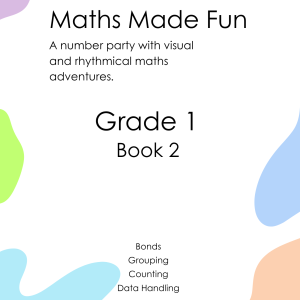
- Consider a ready made maths program that incorporates incremental foundation laying as well as visual, story telling and rhythmical aids.
A Small Effort, Big Rewards
Dedicating a few minutes each day to practicing math bonds can have a lasting impact on your child’s mathematical abilities and confidence. It’s a simple, rewarding way to set them up for success in school and beyond. So, grab some counters, get a maths program that will make it easy for you and watch your child’s love for mathematics grow!
#MathBonds #ParentingTips #MathForKids #LearningTogether